
You will learn about different cargoes and how to safely load, discharge and carry a variety of cargoes on different ship types from bulk carriers and container ships, through to the chemical tankers and gas carriers.
You will learn about the different International Maritime Organisation (IMO) Codes, such as the IMSBC Code and IMDG Code. You will learn how these IMO codes apply to you as a Deck Officer on the different types of ship.
This online training for Deck Cadets is aligned with the Standards of Training, Certification and Watchkeeping (STCW) and the UK MCA / Scottish Qualifications Authority (SQA) Level 7 Marine Cargo Operations unit.
This learning can be used to study and prepare for:
- Marine Cargo Operations assessment
- SQA Stability and Operations assessment
- UK MCA Orals assessment
- Crew Evaluation System (Cargo Handling) questions
- Interview preparation.
You can see the contents of what is contained in this unit in the contents list below, and subscribe here.
“The carrier shall properly and carefully load, handle, stow, carry, keep, care for and discharge the goods carried.”
Hague Rules, Articles iii, Rule 2
- Oil Tanker Cargo Operations
- Oil Tanker Loading Operations
- Oil Tanker Operations Quiz
- Chemical Tanker Cargo Operations
- Pre-arrival Checks for Loading a Chemical Tanker
- Chemical Tanker Loading
- Carriage of Chemical Cargoes
- Discharge of Chemical Tankers
- Gas Carriers
- Loading Gas Carriers
- Carriage of Gas Cargoes
- Inert Gas Systems
- Pipeline Systems
- Direct Line System
- Ring Main System
- Free Flow System
- Ro-Ro Vessels
- Lorries
- Drops
- Cars
- Motorcycles
- Livestock
- Heavy Vehicles
- Over-width and over-length vehicles
- Container Ship Cargo Operations
- IMDG Code
- Using the IMDG Code
- Dangerous Goods Classifications and Segregations
- Ship documentation
- Timber Vessels
- Code of Safe Practice for Ships Carrying Timber Deck Cargoes, 2011
- Stowage and Carriage Principles
- Timber Load Lines
- Carriage of timber
- General Cargo Ships
- Cargo Handling Equipment
- Bulk Carriers
- Equipment Bulk Carriers Must Carry
- Loading Bulk Carriers
- Carriage of bulk cargoes
- Unloading Bulk Cargoes
- The IMSBC Code
- The Grain Code
- Offshore Vessels
- Offshore Vessels Cargo Loading
- Loading and Unloading Cargo at the Rig
- Keeping a Deck Watch
- Safety and Security Rounds
- Code of Safe Working Practices for Merchant Seafarers
- Shipboard Emergencies
- Cargo Calculations
- Stack Height
- Grain Capacity
- Bale Capacity
- Stowage Factor
- Broken Stowage
- Completing cargo calculations
- Dry Cargo Calculations
- Cargo to load accounting for consumables question
- Cargo to load in the remaining space in the holds question
- Cargo to Load on Deck Question
- Wet Cargo Calculations
- Wet Cargo Definitions
- Maximum Capacity
- Finding the appropriate information
- Cargo loading / discharge completion rate question
- Cargo weight to load by Ullage
- Calculation by volumes and relative density
Oil Tanker Cargo Operations
When loading and unloading, the primary consideration for restricting the maximum rate at which a vessel may load is to prevent the excessive build-up of pressure within the cargo system. The restrictions may be caused by the diameter of the ship’s piping system, the capacity of the venting system or the bends in the system for example.
Exceeding the maximum loading rate could cause over pressurisation of the system, stress on the pipework and also the risk of electro-statical build up due to turbulence in the pipes or the cargo dropping into tanks.
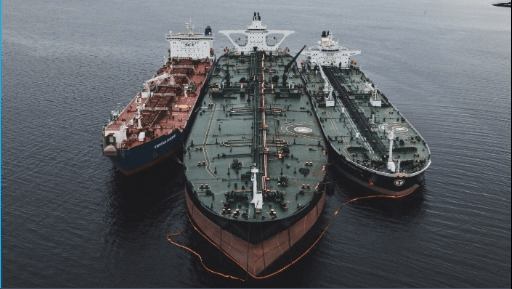
Oil Tanker Loading Operations
The loading operation is as follows:
- Pre-loading meeting and ship/shore safety checklist complete.
2. All cargo tanks Inert Gas lines need to be re-checked and confirmed to be in the correct position before loading commences.
3. The shore facility confirms they are ready to commence loading.
4. Commence loading at a reduced rate, watching the manifold back pressure at all times.
5. Time of commencing loading, and to which tank, should be logged in the cargo log book.
6. Confirm the cargo is going to the correct tank by ullage.
7. For heated cargoes, confirm the cargo temperatures and ensure they are in line with the Charterer’s instructions.
8. After receiving reports of all safety checks confirmed from all stations of deck/pump room watch, the loading tanks can be carefully increased to the agreed loading rate.
9. The Inert Gas pressure to loading tanks must be kept slightly positive at all times during the loading process.
10. The de-ballasting should start ideally when the cargo loading starts. The de-ballasting should be at the rate specified in the cargo plan.
11. The duty deck officer should calculate when the topping off operation will begin and advise the terminal and any extra crew well in advance.
12. The deck officer should ask the deck watch to verify and compare the portable gauges with the fixed cargo tank gauge and those in the cargo control room.
13. If the tank to be topped off is not the final tank, the valve should be closed to the tank when there is sufficient ullage. The valve should never be shut against the full flow.
14. The cargo loading rate should either be slowed down, or stopped if topping off by gravity.
15. The manifold gate valves should be closed after confirming the completion of the cargo operation.
16. At the end of cargo operations, the mast riser or other venting systems should be closed. Tanks should be monitored to ensure they are not over-pressurised.
17. Hoses and arms should be drained at the manifold. The manifold valves should also be drained, after confirming the cargo control room are showing as open.
18. The system should now be de-pressurised and isolated from the Inert Gas system.
19. After gauging and sampling, ensure the following are all closed: Ullage ports, Vapour locks and any other tank openings.
Subscribe to see a video on loading and discharge operations.
Subscribe to get access
Read more of this content when you subscribe today.
 SafeSeas Training